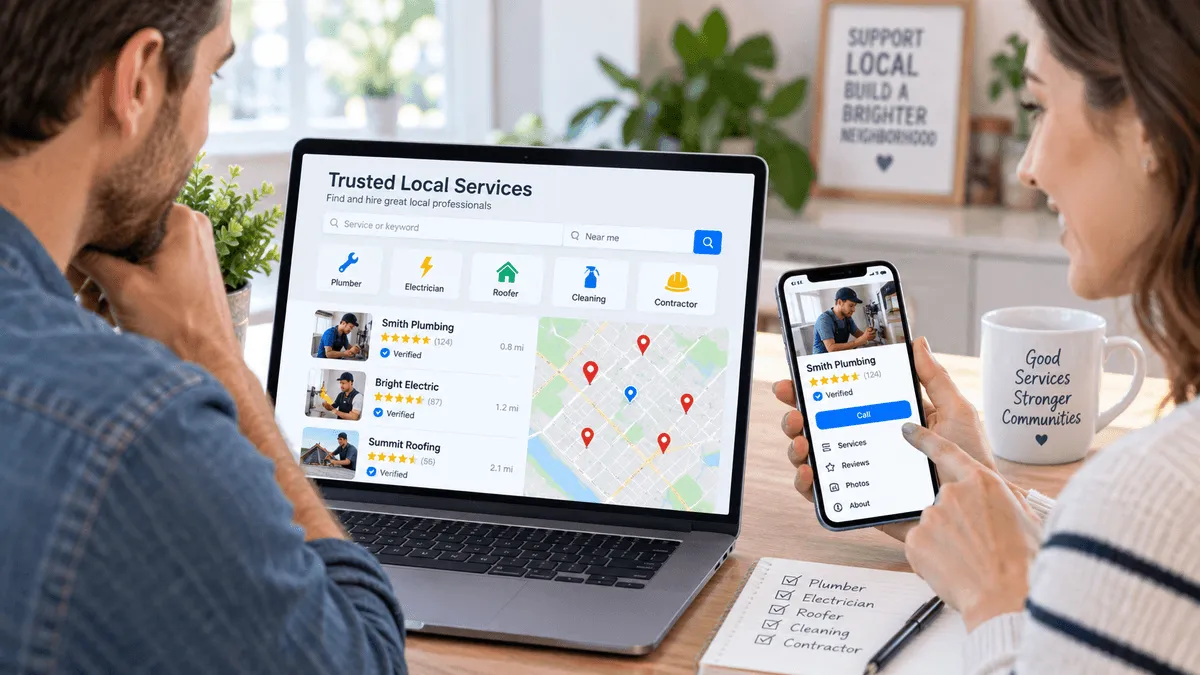
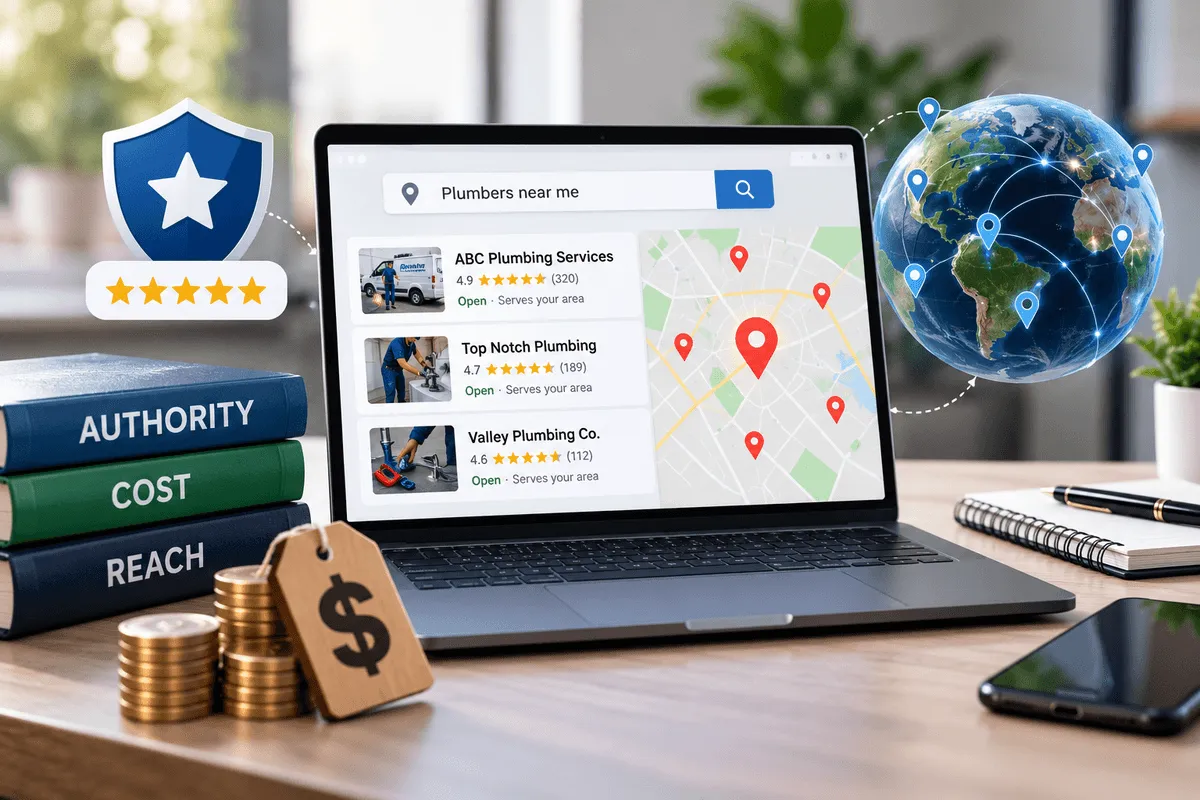
Getting your business listed online can be a simple way to improve visibility and give potential customers another way to discover your company. But with so many directories available, an important question comes up: which online business directories are actually worth your time?
Not every directory offers the same value.
Some platforms are completely free. Others charge for enhanced profiles or additional features. Some receive significant amounts of traffic, while others may have very little activity. There are also differences in website authority, audience, listing management, and the quality of the businesses featured.
For this reason, businesses should evaluate a directory before spending time or money creating a listing.
What Makes an Online Business Directory Valuable?
A useful business directory should do more than simply display a company name.
Ideally, it should help customers discover businesses, provide useful information, and make it easy for people to visit a website, call a company, or learn more about its services.
When evaluating the best online business directories, consider several factors:
- Relevance to your industry
- Geographic coverage
- Website authority
- Organic or referral traffic
- Listing costs
- Profile features
- Ease of updating information
- Customer engagement
- Reputation and overall quality
No single metric tells the whole story. A directory with a huge domain rating may not be particularly useful if your potential customers never use it.
Free vs. Paid Business Directories
One of the first things business owners usually consider is cost.
Free Business Directories
Free listings can be an excellent starting point, especially for small businesses with limited marketing budgets.
A free profile may allow you to add your business name, location, phone number, website, category, and description.
The biggest advantage is obvious: there is no direct listing fee.
However, free listings may sometimes have fewer features. You may have limited customization options, fewer promotional tools, or less control over how your profile appears.
That does not mean free directories are not valuable. If a directory is relevant, trustworthy, and used by your target customers, a free listing can still be worthwhile.
Paid Business Listings
Paid directories may offer additional features in exchange for a subscription or listing fee.
Depending on the platform, these can include enhanced profiles, greater visibility within the directory, additional business information, advertising opportunities, analytics, lead-generation tools, or listing management features.
However, paying for a listing does not automatically make it better.
Before purchasing a premium plan, consider what you are actually receiving in return. If the directory has little traffic or does not reach your target audience, a paid listing may not provide much value.
The question should always be:
What can this directory realistically do for my business?
Look at Domain Authority Carefully
Website authority is often discussed when businesses compare directories.
Metrics such as Domain Rating, Domain Authority, or similar third-party scores are designed to estimate the strength of a website’s backlink profile or overall authority.
A directory with a strong authority score may appear attractive because it has an established online presence.
But these scores should not be treated as guarantees.
Third-party SEO metrics are estimates, not official search-engine ranking scores. A high score does not automatically mean that your individual listing will rank highly or send customers to your website.
Use authority metrics as one evaluation factor, rather than the only reason to choose a directory.
Check Website Traffic
Traffic can be another useful measurement.
A directory that receives a significant amount of relevant traffic may give your business more opportunities to be discovered.
But traffic quality matters just as much as traffic volume.
Imagine two directories:
Directory A receives millions of visitors every month, but almost none are interested in your industry.
Directory B receives fewer visitors, but a large portion are people searching for the type of service you provide.
Directory B could potentially be more valuable to your business.
This is why businesses should look beyond the headline traffic number and consider whether the directory’s audience matches their customers.
Consider Spam and Website Quality
Another useful evaluation metric is the overall quality of the directory.
Some websites may have large numbers of low-quality listings, irrelevant pages, excessive advertisements, or obvious spam.
A directory with a poor reputation may not be worth associating your business with.
When reviewing a platform, browse through several listings.
Ask yourself:
- Does the website look professional?
- Are the businesses relevant?
- Is the information useful?
- Does the site appear actively maintained?
- Are there obvious spam listings?
- Can customers actually search and discover businesses easily?
A clean, well-maintained directory is generally more appealing to both businesses and consumers.
Relevance Is More Important Than Numbers
Business owners sometimes make the mistake of thinking that more listings always mean better results.
That is not necessarily true.
Creating profiles on dozens of irrelevant websites can take time without producing meaningful benefits.
Instead, prioritize directories that are relevant to your location, industry, and audience.
For example, a local restaurant should consider platforms where people actually search for restaurants and food services. A construction company may benefit more from directories focused on contractors, home services, or local businesses.
The goal is to be visible where your customers are looking.
What Are Business Citation Platforms?
Business citation platforms are websites where companies can publish important business information, commonly including their name, address, and phone number.
These citations can form part of a local SEO strategy.
Consistency is important.
If your business is listed with one phone number on your website and a different number on several directory profiles, customers may become confused.
Before submitting your company to another directory, prepare a standard version of your business information and use it consistently.
Keep track of where your business is listed so you can update those profiles when your information changes.
Listing Management Can Save Time
Managing multiple business listings can become difficult as your online presence grows.
Imagine having 20 different profiles and then changing your business phone number. Updating every profile manually can take time.
This is where listing management tools can become useful.
Some platforms offer tools that help businesses manage information across multiple listings. Depending on the service, these tools may allow businesses to update details, monitor listings, identify inconsistencies, or manage profiles from one place.
For businesses with only a few listings, manual management may be perfectly practical. Larger businesses with multiple locations may benefit more from centralized management.
Evaluate the Real Cost
When comparing the best free business directories with paid options, do not only look at the price.
Think about the total value.
For a free directory, your main investment may be the time required to create and maintain the listing.
For a paid directory, consider the actual subscription cost and what you receive in return.
Ask:
Will this listing help people find my business?
Does the directory attract my target audience?
Are the additional features useful?
Can I measure traffic, leads, or engagement?
If the answer to most of these questions is no, paying for a premium profile may not make sense.
When Should You Consider Top Paid Business Listings?
Paid listings can make sense when a directory has a strong audience and offers features that genuinely support your marketing goals.
For example, a business may consider a paid profile if it provides enhanced visibility, useful lead-generation tools, better profile customization, or valuable analytics.
However, businesses should avoid paying simply because a platform claims to have “high authority.”
Authority alone does not guarantee customers.
Look at the complete picture: audience, relevance, traffic, features, reputation, and cost.
High-Traffic Online Directories Can Offer More Exposure
A directory with strong traffic can potentially expose your business to more people.
But again, relevance matters.
A high-traffic website that attracts people looking for completely different services may have limited value to your company.
Ideally, look for high traffic online directories that also have an audience connected to your industry or location.
This combination can make a listing more useful than traffic numbers alone.
A Simple Checklist for Choosing a Directory
Before creating a business listing, run through this quick checklist:
- Is it relevant?
Does the directory feature your industry or location? - Does it have a real audience?
Look for evidence that people actually use the platform. - Is the website trustworthy?
Avoid platforms filled with obvious spam or poor-quality listings. - Is the cost reasonable?
Compare the price with the features and potential value. - Can you manage your information?
Make sure you can update your profile when necessary. - Does it provide useful information to customers?
A directory should make it easier for people to understand and contact your business. - Are the SEO metrics being used correctly?
Treat domain rating, authority, and similar metrics as indicators—not guarantees.
Final Thoughts
There is no single directory that is automatically the best choice for every business.
The right platform depends on your industry, location, customers, budget, and marketing goals.
Free directories can be useful for building a basic online presence, while paid platforms may provide additional tools and visibility. Website authority, traffic, spam levels, and listing management features can all help you evaluate your options, but none of these measurements should be considered in isolation.
The smartest approach is to focus on quality rather than quantity.
Choose business citation platforms that are relevant to your customers, keep your business information accurate, and regularly review your listings. Over time, these small steps can contribute to a stronger and more organized online presence.
For a small business, the goal isn’t simply to be listed everywhere.
It’s to be listed in the right places, in front of the right people, with the right information.